
Home Improvement Projects with Community Impact
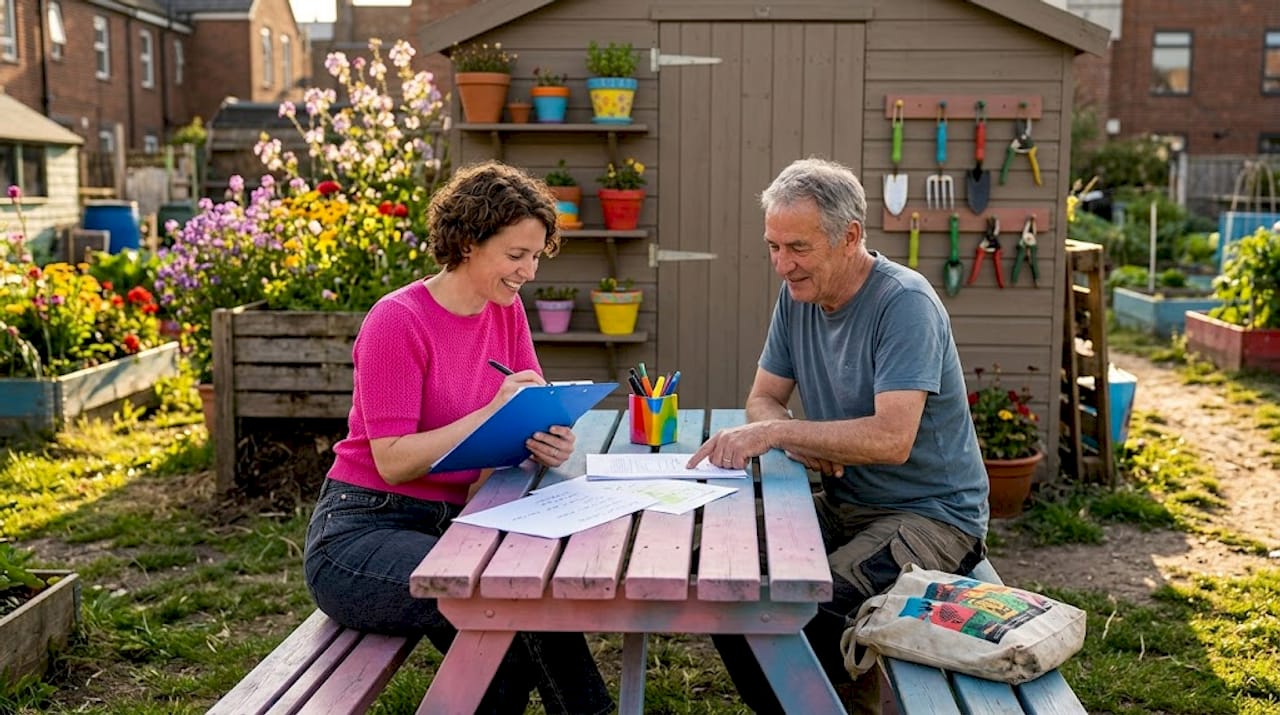
Your home is more than a structure. It’s a node in a living neighborhood, and the choices you make about improving it ripple outward in ways most homeowners never fully consider. Home improvement projects with community impact go beyond curb appeal or resale value. They address real social needs, reduce environmental strain, and create spaces where neighbors actually connect. Choosing the right project, though, is harder than it looks. This guide gives you a clear framework, a ranked list of projects, and the honest trade-offs so you can act with confidence.
Table of Contents
Key takeaways
Point | Details |
Community input is non-negotiable | Projects that skip neighborhood feedback face pushback and underperform on social outcomes. |
Infrastructure beats aesthetics | Energy upgrades and accessibility retrofits deliver more lasting benefit than cosmetic improvements. |
Hybrid funding cuts costs dramatically | Combining crowdfunding, donations, and local partnerships can reduce project costs by up to 50%. |
Collective efforts multiply impact | Neighborhood collaborations produce better outcomes than single-homeowner projects working in isolation. |
Sustainability is a long-term mindset | Consistent, evolving choices in energy and materials compound over time far more than one-time upgrades. |
1. How to evaluate home improvement projects with community impact
Not every upgrade that sounds good actually delivers neighborhood value. Before you pick up a shovel or call a contractor, run any project through these criteria.
Community engagement and inclusivity. Did neighbors have a say in what gets built? Pre-construction community workshops and surveys are the single most overlooked step in renovation planning. Projects designed without resident input tend to miss actual needs and generate resistance that slows or kills the effort entirely.
Environmental sustainability. Does the project reduce energy use, manage stormwater, or improve air quality? Sustainable upgrades that combine efficiency, water conservation, and eco-friendly materials deliver compounding financial and environmental returns over time.
Budget and funding realism. Can you fund this without burning out? Grassroots fundraising, in-kind donations, and local business sponsorships are underused tools that make projects feasible without large upfront capital.
Long-term maintenance and ownership. Who keeps this running in year three? Projects without a maintenance plan deteriorate and can actually damage neighborhood morale when they fall apart publicly.
Alignment with broader goals. Does your project connect to existing neighborhood improvement initiatives, city plans, or nonprofit missions? Projects that plug into larger frameworks attract more support and last longer.
Pro Tip: Before finalizing any project scope, attend one city council or neighborhood association meeting. You will discover funding sources, zoning constraints, and potential partners you would never find online.
2. Community gardens and pollinator-friendly landscaping
A well-designed community garden does three things at once: it produces food, creates a gathering point, and improves local biodiversity. These are among the most accessible DIY projects for local impact because they scale with whatever budget and volunteer base you have.
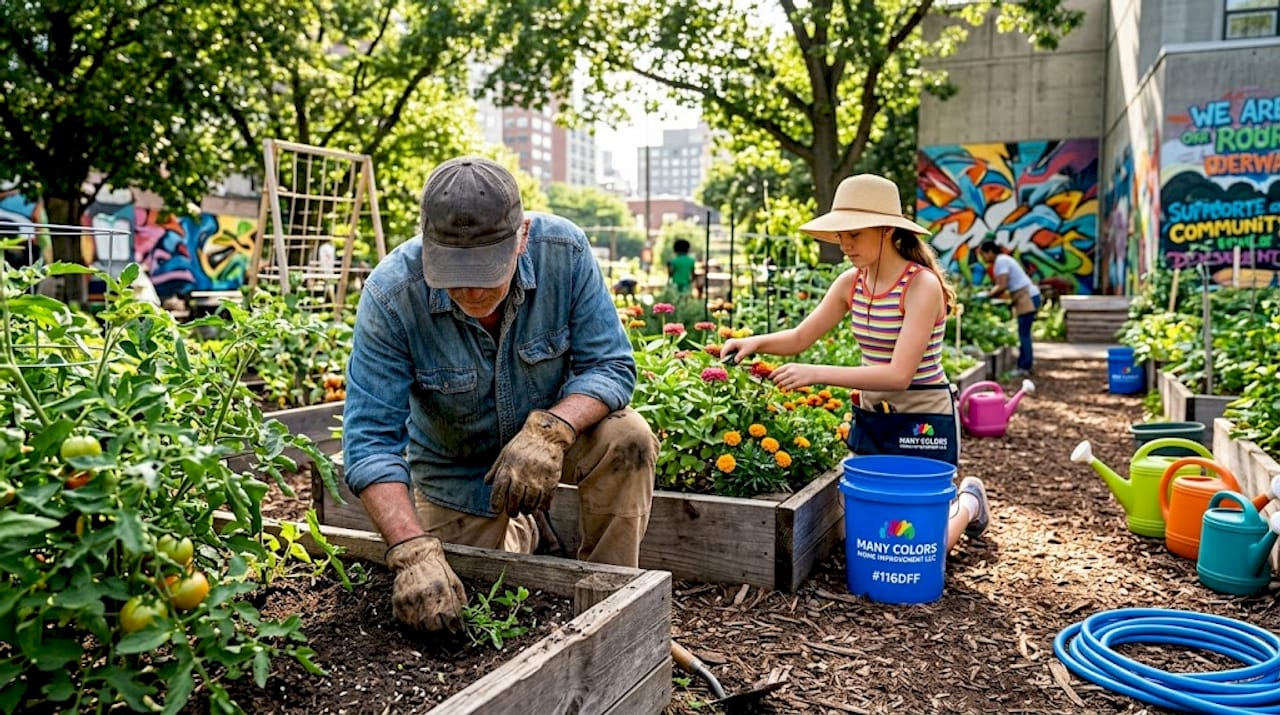
A $20,000 community garden in Oakland involved 40 neighbors and raised over $22,000 through crowdfunding, turning a blighted corner into a thriving green space. The lesson there is not just about plants. It’s about what happens to a neighborhood’s sense of ownership when people build something together.
Adding pollinator strips alongside vegetable beds multiplies the ecological benefit. Native flowers attract bees and butterflies, which support local food production well beyond your property line.
3. Energy-efficient upgrades: heat pumps and insulation
This is where individual home improvement creates the most invisible but measurable community impact. Replacing a gas furnace with a heat pump saves households $1,530 annually and cuts carbon emissions by 40%. When multiple homes in a neighborhood make this switch, the cumulative effect on local air quality is significant.
Insulation and air sealing are equally powerful and far cheaper. Sealing air leaks and upgrading attic insulation can cut heating and cooling loads by 20 to 30 percent. These upgrades also reduce the urban heat island effect, which benefits everyone on your block during summer months.
Pro Tip: Check your utility provider’s rebate programs before purchasing any energy equipment. Many utilities in Wisconsin and across the Midwest offer rebates that cover 30 to 50 percent of heat pump installation costs.
4. Accessible outdoor gathering spaces and playground upgrades
Community-focused renovations that add playground equipment, landscaping, and seating transform underused lots into social anchors. The Carver Square Park renovation in Delray Beach is a textbook example: new benches, updated play structures, and fresh landscaping turned a neglected space into a place people actually use daily.
You do not need to own a park to contribute. Homeowners with corner lots or large front yards can create semi-public seating areas, chess tables, or small green spaces that serve the same social function. The key is designing for multiple age groups so the space draws in the whole neighborhood, not just one demographic.
Architects working on aging community properties are prioritizing socialization over expansion, recognizing that shared spaces build stronger social ties than adding square footage. That principle applies just as well to residential neighborhoods.
5. Accessibility retrofits and aging-in-place adaptations
Widening doorways, adding ramps, installing grab bars, and improving exterior lighting are not glamorous projects. They are, however, among the highest-impact improvements you can make for neighbors who are aging or living with disabilities. Infrastructure upgrades like ADA compliance yield the highest long-term operational savings and social returns, even when they are invisible to most passersby.
When a homeowner retrofits their property for accessibility, it also signals to the neighborhood that inclusion is a shared value. That cultural signal matters. It encourages other homeowners to think about who their spaces actually serve.
6. Home-based public art installations
A mural on a fence, a mosaic on a retaining wall, or a sculpture garden in a front yard can shift how a street feels to everyone who walks it. Public art reduces vandalism in areas where it’s installed, increases foot traffic to local businesses nearby, and gives residents a shared point of pride.
The most effective installations involve local artists and community members in the design process. When neighbors see their own stories or imagery reflected in the work, the art becomes a community asset rather than a homeowner’s decoration.
7. Comparison of renovation approaches and their trade-offs
Understanding which approach fits your situation saves time, money, and frustration.
Approach | Cost | Community benefit | Timeline | Best for |
Solo DIY project | Low | Moderate | Short | Quick wins, low-risk upgrades |
Collective neighborhood effort | Low to medium | High | Medium | Gardens, murals, shared spaces |
Professional contractor-led | Medium to high | High | Medium to long | Structural, electrical, accessibility work |
Hybrid funding model | Variable | Very high | Long | Large-scale impactful home restoration |
Hybrid funding models that combine grassroots fundraising with in-kind donations and volunteer labor can reduce total project costs by up to 50%. Richmond’s tiny home village for young adults used exactly this model, combining mixed funding streams with volunteer construction to make affordable community housing a reality.
DIY grassroots efforts build social capital and cost less, but they require sustained volunteer energy and can stall without a clear leader. Professional projects move faster and produce more reliable results, but they cost more and can feel less “owned” by the community if residents weren’t involved in planning.
8. How to initiate and sustain neighborhood improvement initiatives
Starting a community project is easier than sustaining one. Here’s a sequence that actually works.
Map your neighbors’ priorities. Before proposing anything, knock on doors or send a simple survey. Ask what bothers people most about the block and what they wish existed. This data shapes your pitch and builds early buy-in.
Host a low-stakes kickoff meeting. Keep the first gathering informal. Coffee at someone’s house or a weekend afternoon in the park works better than a formal presentation. The goal is conversation, not a PowerPoint.
Identify two or three committed co-leaders. Projects with a single champion collapse when that person burns out. Distribute ownership from day one.
Build a funding stack. Locally sourced materials and donated labor can dramatically reduce costs. Layer in crowdfunding, small business sponsorships, and any available city or nonprofit grants.
Set a visible milestone within 60 days. Early visible progress keeps volunteers motivated and skeptics quiet. Even a painted fence or a planted bed signals momentum.
Create a maintenance rotation. Assign specific tasks to specific people on a rotating schedule. Vague collective responsibility means nobody does anything.
Pro Tip: Contact your city’s neighborhood services department before launching any public-facing project. Many cities offer free technical assistance, permit fee waivers, and small grants specifically for collaborative home enhancement and neighborhood beautification efforts.
My honest take on what actually makes these projects work
I’ve led enough renovation projects to know that the ones people remember are rarely the ones with the biggest budgets. What I’ve seen consistently is this: the projects that stick are the ones where the community was genuinely consulted before a single decision was made.
In my experience, most project failures trace back to one moment: when someone decided they already knew what the neighborhood needed. I’ve watched well-funded, well-intentioned renovations sit unused because nobody asked the people who actually live there what they wanted.
What I’ve also learned is that the most impactful upgrades are the ones you can’t photograph for social media. Energy systems, accessibility features, and structural improvements don’t make great Instagram posts. But they are what keeps a building functional and inclusive for decades. I always push clients toward those invisible investments first, even when they’d rather talk about paint colors.
The other thing I’ll say plainly: collaborative projects build something that no contractor can install. When neighbors work alongside each other on something physical, they develop trust and relationships that make the whole block safer and more resilient. That social capital is the real return on investment.
— Ricco
How Manycolorswi brings community-driven renovation to life

At Manycolorswi, community impact isn’t a marketing angle. It’s the reason the company exists. Founded to give residents of a Milwaukee homeless shelter real employability skills and a path back into the workforce, Manycolorswi brings a workforce that understands what it means to rebuild, literally and personally.
Every flooring installation, drywall repair, painting job, and lawn care project is handled by a team that has been trained, motivated, and given a second chance. When you hire Manycolorswi for your next home or neighborhood project, you’re not just getting quality work. You’re participating in a model of community engagement in renovations that creates jobs, builds skills, and strengthens Milwaukee one project at a time. If you’re ready to start a project that does more than improve your property, reach out and see what’s possible.
FAQ
What makes a home improvement project have community impact?
A project has community impact when it improves shared quality of life, not just individual property value. This includes energy upgrades that reduce neighborhood emissions, accessible spaces that serve all residents, and gathering areas that build social connection.
How do I fund a community-focused renovation without a large budget?
Hybrid funding works best. Combine crowdfunding, in-kind material donations, local business sponsorships, and city neighborhood grants. Mixed funding and volunteer labor can cut total project costs by up to 50%.
Should I hire a contractor or go DIY for neighborhood projects?
It depends on the scope. Structural, electrical, and accessibility work requires licensed professionals. Gardens, murals, and landscaping are well-suited to organized volunteer efforts. Many successful projects use both.
How do I get neighbors involved in a home improvement initiative?
Start with listening, not pitching. Door-to-door surveys and informal gatherings generate far more genuine participation than formal presentations. Community input during design is the most critical factor in whether a project succeeds or stalls.
Which sustainable upgrades deliver the most neighborhood benefit?
Heat pumps and insulation top the list for environmental impact. A single household switching to a heat pump reduces carbon emissions by 40% annually. When multiple homes on a block make the switch, the cumulative air quality improvement is measurable.
Recommended
Comments