
What Is Cause-Aligned Home Renovation for Homeowners
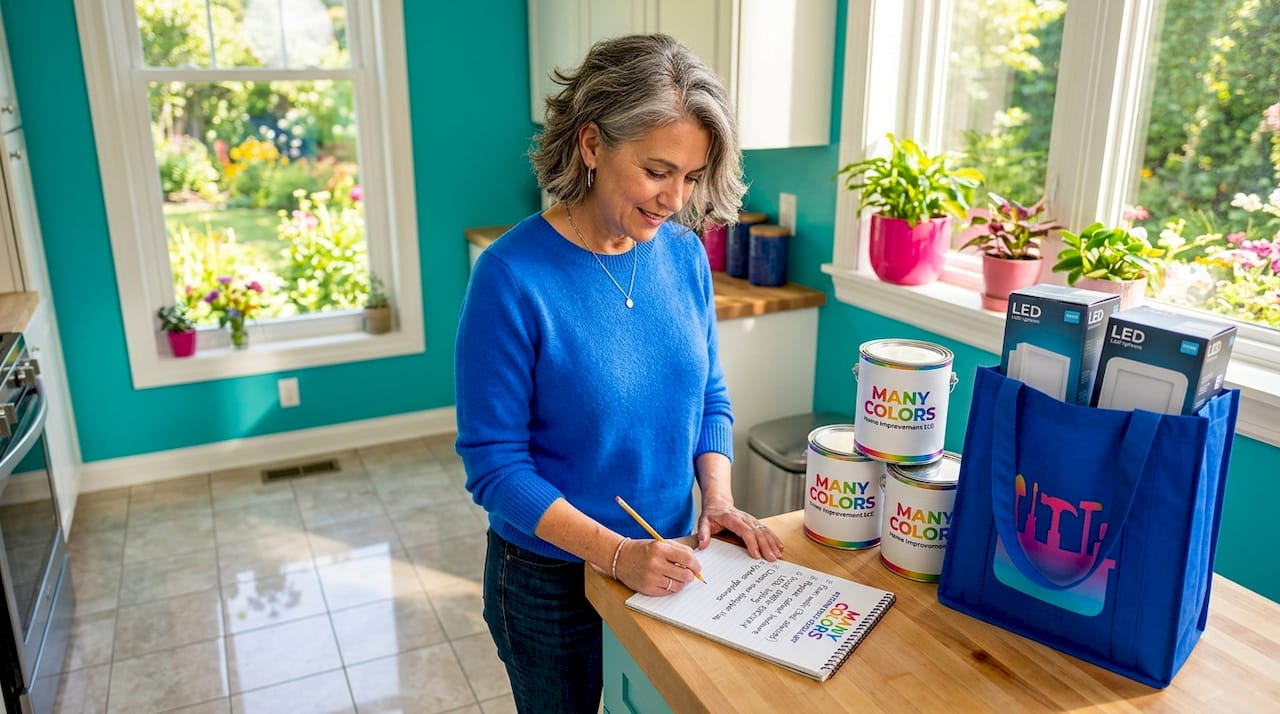
Most homeowners think of sustainability as something you bolt onto a renovation after the real decisions are made. Pick the flooring, choose the paint, then maybe swap in an LED bulb and call it green. What is cause-aligned home renovation, then? It’s the opposite of that. It’s a value-driven approach where your ethical commitments shape every decision from the first planning conversation to the final walk-through. It’s not a checklist. It’s a mindset that connects your home to the health of your community and the planet.
Table of Contents
Key Takeaways
Point | Details |
More than sustainability | Cause-aligned renovation embeds social and environmental values into every project decision, not just product swaps. |
Ethics start in the supply chain | Certifications like FSC and Fair Trade help you avoid forced labor and human rights violations in renovation materials. |
Embed goals in your bid documents | Specify cause-related criteria upfront so contractors price and schedule work with your values built in from day one. |
Small changes build real momentum | Many cause-aligned choices cost only 5 to 15% more and deliver compounding health, financial, and social returns over time. |
Collaboration makes it work | Shared buy-in from homeowners, contractors, and designers is what separates a cause-aligned project from a greenwashed one. |
What cause-aligned home renovation actually means
Cause-aligned renovation means planning your project around a clear social or environmental mission rather than treating sustainability as something to consider after the budget is set. The mission guides your material choices, your contractor selection, your fixture specs, and even how you communicate expectations on site.
This is different from conventional renovation in a fundamental way. A conventional project asks: what do I want, and how much does it cost? A cause-aligned project asks: what do I want, what does it cost, and does this choice reflect what I stand for?
Focus areas typically fall into a few categories:
Environmental missions: Energy efficiency upgrades, water conservation fixtures, low-VOC paints, and materials with low embodied carbon
Health missions: Improving indoor air quality by eliminating toxic finishes and switching away from gas appliances
Social missions: Prioritizing contractors who pay fair wages, hire from underserved communities, and maintain safe job sites
Supply chain missions: Sourcing materials certified by third parties to confirm no forced labor or deforestation in production
Concrete examples make this tangible. Choosing low-VOC paint over standard paint is a cause-aligned choice when it’s made intentionally because of its health impact, not just because it was on sale. Installing a water-saving showerhead because you care about conservation is cause-aligned. Hiring a contractor who employs people returning from homelessness is cause-aligned. The cause gives the choice its meaning.
Pro Tip: Write down your top two causes before you talk to a single contractor. That clarity will shape every conversation and prevent your values from getting lost in the excitement of design decisions.
Supply chain ethics and fair labor in renovation
Here’s something most renovation guides skip entirely. The materials sitting in your home have a history. That hardwood floor traveled through a supply chain that may have involved logging practices linked to deforestation, or labor conditions that fall far short of basic human rights standards. The construction industry risks forced labor at multiple points in the supply chain, from raw material extraction to manufacturing to on-site subcontracting.
Third-party certifications are your most practical tool here. FSC certification for wood products confirms responsible forest management. Fair Trade certification for textiles and some building materials signals that workers were paid fairly and worked in safe conditions. These aren’t perfect systems, but they give you a starting point that’s far better than taking a supplier’s word for it.
Demanding supply chain transparency through certifications and direct supplier inquiries is the practical way to avoid embedded human rights abuses in renovation materials.
Local sourcing is another powerful lever. When you buy materials from a local supplier, you can often visit their facility, ask direct questions, and verify labor practices in person. Short supply chains are traceable supply chains. They also support your local economy, which is a cause in itself.
When it comes to contractors, vetting goes beyond checking licenses and reviews. Ask directly about hiring practices. Do they pay above minimum wage? Do they use subcontractors, and if so, how do they screen them? Ethical labor enforcement requires open communication about these practices before anyone swings a hammer.
Here’s a practical checklist for ethical contractor and supplier vetting:
Ask for FSC or Fair Trade certifications on wood and textile products
Request documentation of where key materials are manufactured
Ask contractors how they handle subcontractor hiring and safety compliance
Visit local suppliers when possible to verify conditions directly
Check whether your contractor has a clear policy on worker pay and benefits
Pro Tip: Add a one-paragraph “values statement” to your project brief. Contractors who align with it will say so. Those who don’t will self-select out, saving you friction later.
Practical steps from design through construction
The single biggest mistake homeowners make is treating cause-alignment as a conversation to have after the scope of work is written. By then, the budget is set, the materials are spec’d, and your values are an afterthought. Cause-aligned renovation requires embedding your cause targets into the project scope and bid documents as procurement requirements, not post-hoc requests.
What does that look like in practice? If low-VOC paint matters to you, write “low-VOC paint throughout, no exceptions” into the scope before bids go out. If you want ENERGY STAR appliances, list them by name in the spec. If you want your contractor to hire locally or from underserved communities, say so in writing before you sign anything. Contractors who can’t meet those requirements will tell you upfront, which is exactly what you want.
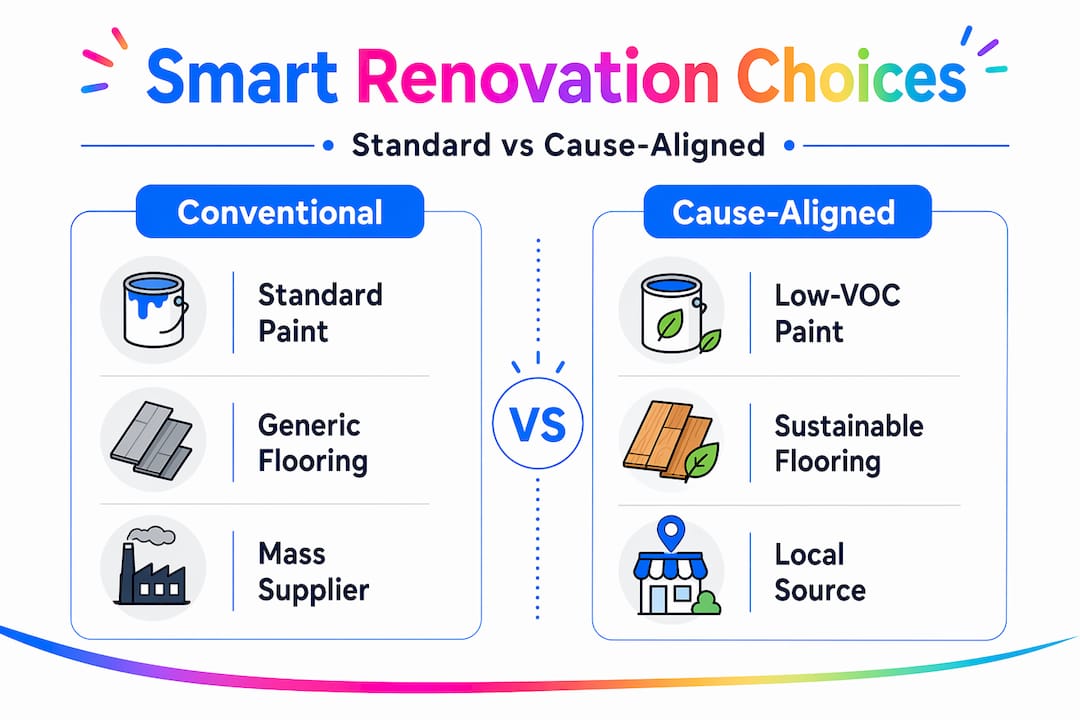
Here’s a comparison of conventional renovation choices versus their cause-aligned alternatives:
Conventional choice | Cause-aligned alternative | Primary benefit |
Standard interior paint | Low-VOC or zero-VOC paint | Reduced indoor air pollutants |
Standard hardwood flooring | FSC-certified wood or reclaimed lumber | No deforestation, traceable sourcing |
Gas range/oven | Induction electric range | Lower indoor nitrogen dioxide exposure |
Standard showerhead | WaterSense-certified fixture | Up to 20% water savings |
Lowest-bid contractor | Contractor with fair wage and safe site policy | Supports ethical labor standards |
Big-box materials | Local supplier materials | Shorter supply chain, local economic impact |
Cause-alignment also works better when everyone in the room shares the mindset. That means bringing your designer and contractor into the conversation early, not just handing them a list of requirements. When homeowners, renters, and contractors share the mindset, the project stops feeling like a compliance exercise and starts feeling like a shared goal.
You don’t have to do everything at once. Start with the room you’re renovating right now. Apply cause-aligned thinking there, learn what works, and carry it forward to the next project.
Pro Tip: Think of awnings and exterior shading as a cause-aligned choice too. Energy-efficient shading can meaningfully reduce cooling loads, which lowers both your energy bill and your carbon footprint.
Overcoming challenges and common misconceptions
The most common objection to cause-aligned renovation is cost. And it’s worth taking seriously rather than dismissing. The honest answer is that some cause-aligned choices do cost more upfront. Low-VOC paint, for example, typically runs 5 to 15% more than standard paint. FSC-certified wood can carry a premium. But many choices are cost-neutral or pay back quickly through energy and water savings.
The second most common misconception is that cause-aligned renovation is all or nothing. It isn’t. You don’t need to gut your entire home and rebuild it with reclaimed materials to make a meaningful difference. Incremental changes compound over time. A water-saving fixture installed today saves water every day for the next 15 years.
Here are the most common pitfalls and how to avoid them:
Focusing only on products, not people: Buying certified materials while ignoring labor practices on your job site misses half the picture. Cause-alignment covers both.
Skipping the contractor conversation: Assuming your contractor shares your values without discussing them leads to misalignment mid-project. Have the conversation early.
Treating it as a one-time project: Cause-aligned renovation is a practice, not a single event. Each project builds on the last.
Letting perfect be the enemy of good: Not every choice will be fully cause-aligned. Make the best decision available to you and document why.
Pro Tip: Start with paint. It’s the most accessible cause-aligned swap in any renovation, the cost difference is small, and the health benefit is immediate. A successful first step builds the confidence to take bigger ones.
Benefits that go beyond aesthetics
The returns from cause-aligned renovation show up in more places than most homeowners expect. Health is the most immediate. Switching to low-VOC paints and electric cooking reduces your household’s exposure to volatile organic compounds and nitrogen dioxide, two pollutants linked to respiratory issues and long-term health risks.
Here’s a snapshot of measurable impact areas:
Impact area | Cause-aligned choice | Typical benefit |
Indoor air quality | Low-VOC paint, induction cooking | Significant reduction in VOC and NO2 exposure |
Water use | WaterSense fixtures | Up to 20% reduction in household water consumption |
Energy use | ENERGY STAR appliances, insulation upgrades | 10 to 30% reduction in energy bills |
Social impact | Hiring contractors with fair labor practices | Supports workforce equity and community stability |
Supply chain | FSC and Fair Trade certified materials | Reduced risk of forced labor and deforestation |
Beyond your home, the social impact ripples outward. When you hire a contractor who employs people from underserved communities, you’re contributing to workforce equity in a direct and measurable way. When you talk openly with your neighbors about your choices, you create awareness that can shift how others think about their own projects. Cause-aligned renovation as a movement grows one conversation at a time.
Long-term property value is also worth mentioning. Energy-efficient homes command higher prices in most markets, and buyers increasingly factor in health and sustainability features when making decisions.
Pro Tip: After your renovation, share one specific choice you made and why with a neighbor or on a local community board. You don’t need to lecture anyone. Just tell your story. That’s how cultural shifts actually happen.
My perspective on cause-aligned renovation
I’ve been in facilities and home improvement long enough to have seen every version of the “we care about sustainability” conversation. Most of the time, it’s a label. A coat of paint over business as usual. What I’ve learned from building Manycolorswi is that cause-aligned renovation is only real when it changes who you hire, how you source, and what you’re willing to put in writing before a project starts.
The thing that surprised me most wasn’t the cost or the logistics. It was how much the people doing the work responded to being part of something intentional. When workers know the project has a mission behind it, they show up differently. That’s not a theory. I’ve watched it happen.
My honest take on the biggest misconception? People think cause-aligned renovation is about the products. It isn’t. It’s about the relationships. The contractor you choose, the supplier you trust, the conversation you have before anyone picks up a tool. Get those right, and the products follow naturally.
If you’re reading this and wondering where to start, my answer is always the same. Start with the next project, whatever it is. Apply one cause-aligned principle. See what happens. Cause-alignment as a lifelong practice builds the same way any good habit does. One decision at a time.
— Ricco
How Manycolorswi brings cause-aligned renovation to life
If what you’ve read here resonates, Manycolorswi was built to be exactly the kind of partner this approach requires. Founded in Milwaukee to address the employment challenges faced by residents of a homeless shelter, the company hires and trains people who are often overlooked, giving them real skills and real opportunities through hands-on home improvement work.

When you hire Manycolorswi for flooring, drywall, painting, or lawn care, you’re not just getting quality work. You’re supporting a workforce built on fair labor, diversity, and genuine second chances. That’s cause-aligned renovation in practice, not just in principle. Every project the team completes is a direct investment in the Milwaukee community. If you’re ready to renovate with your values intact, explore their services and see how your next project can do more than update your space.
FAQ
What is cause-aligned home renovation?
Cause-aligned home renovation means planning your project around a clear social or environmental mission, where your values shape material choices, contractor selection, and project goals from the start rather than as an afterthought.
Does cause-aligned renovation cost significantly more?
Many cause-aligned choices carry only a modest premium. Low-VOC paint, for example, typically costs 5 to 15% more than standard paint, and energy-efficient appliances often pay back their cost difference through utility savings within a few years.
How do I find contractors who support ethical labor practices?
Ask contractors directly about their hiring practices, subcontractor vetting, and worker pay policies before signing any agreement. Contractors who align with your values will welcome the conversation.
What certifications should I look for in renovation materials?
FSC certification confirms responsible forestry for wood products, and Fair Trade certification signals ethical labor practices for textiles and some building materials. Both are reliable starting points for ethical sourcing.
Can I do cause-aligned renovation on a tight budget?
Yes. Cause-aligned renovation is not all-or-nothing. Start with one high-impact, low-cost change like low-VOC paint or a WaterSense fixture, and build from there as your budget allows.
Recommended
Comments