
How Home Repair Helps Communities Grow Stronger
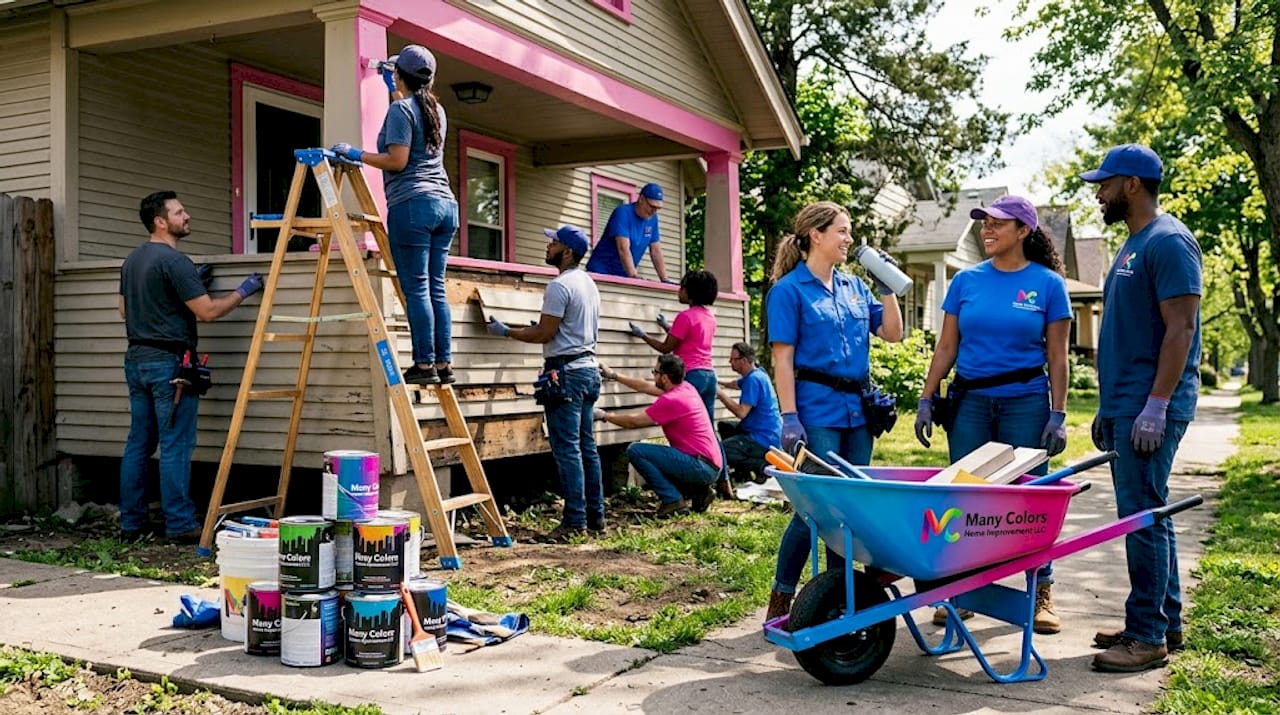
Most people think of home repair as a private matter. A leaky roof, a broken furnace, a crumbling porch. You fix it, you move on. But understanding how home repair helps communities reveals something far bigger than any single household project. When a home falls into disrepair, the effects ripple outward. Property values drop, safety risks rise, and neighbors lose confidence in their block. Conversely, when repair programs take root, they rebuild more than walls. They rebuild trust, economic stability, and the kind of neighborhood pride that keeps communities intact for generations.
Table of Contents
Key takeaways
Point | Details |
Repair protects generational wealth | Home repair programs preserve homeownership equity, especially for low-income and minority families at risk of displacement. |
Volunteers build more than homes | Community repair events create social bonds and shared skills that outlast any single project. |
Small budgets create big results | Pilot programs with modest funding have proven they can transform neighborhoods and earn community trust. |
Energy upgrades benefit everyone | Efficient repairs lower costs for homeowners and reduce the financial burden on local municipalities. |
Wraparound services multiply impact | Pairing repair assistance with financial coaching and legal aid dramatically increases long-term outcomes for recipients. |
How home repair helps communities fight inequality
Home repair is not a luxury. For millions of low-income homeowners, the inability to fix a broken furnace or patch a damaged roof is not a matter of preference. It is a crisis that compounds over time. Small problems become structural failures. Structural failures become uninhabitable conditions. And uninhabitable conditions push families out of homes they may have owned for decades.
The barriers are real and well-documented. Many low-income homeowners lack savings for emergency repairs, cannot qualify for traditional loans, and are unaware of assistance programs that could help. The average cost for essential home repairs per house in Richmond, VA was $8,300 during 2023 and 2024. That number is out of reach for a household already stretched thin.
The stakes go beyond comfort. Home repair programs are directly tied to closing the racial wealth gap by preserving homeownership and equity. When homes fall into disrepair, families lose the ability to pass lasting value to future generations. That is generational wealth, gone. Programs that fund repairs are not just fixing houses. They are protecting the financial futures of families who have already faced decades of systemic disadvantage.
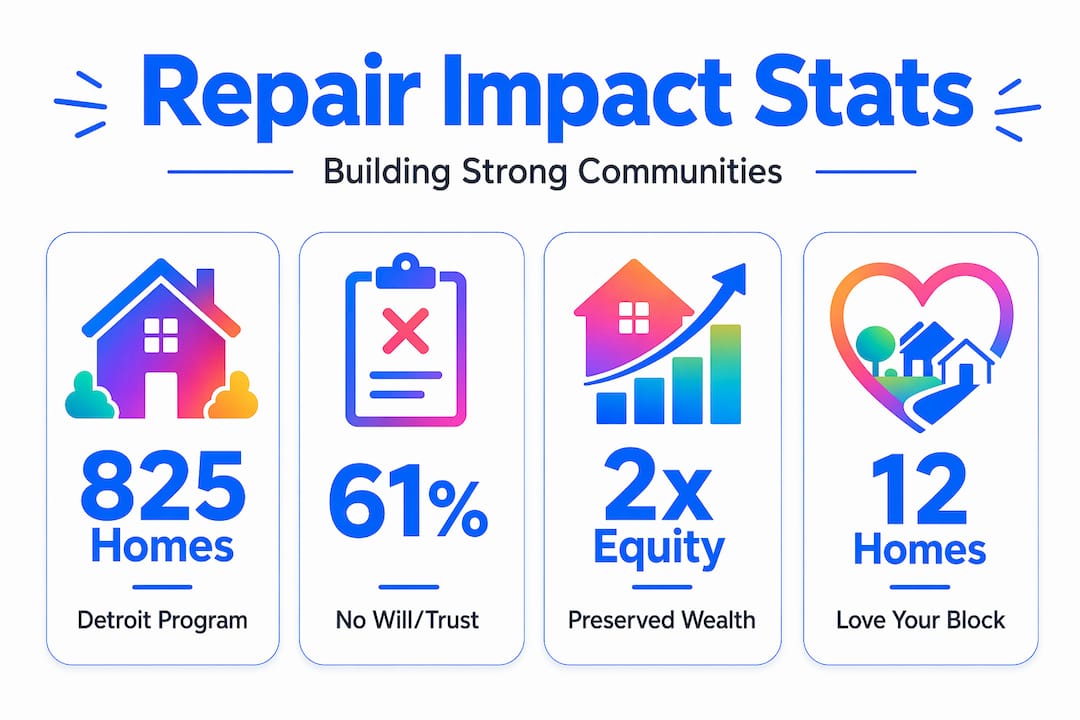
Government and nonprofit models have shown what works. Detroit’s 0% Interest Home Repair Loan Program helped 825 homeowners with nearly $17 million invested, preserving homes and building equity across the city. Third-party nonprofits managed intake and paired recipients with wraparound services like financial coaching and legal aid, which dramatically increased the program’s reach and effectiveness.
Program type | Key benefit | Who it serves |
0% interest repair loans | Preserves equity without debt burden | Low-income homeowners |
Grant-based assistance | No repayment required | Elderly and disabled residents |
Volunteer repair programs | Free labor and materials | Households with no financial options |
Nonprofit intake management | Streamlined access and wraparound services | Marginalized and underserved populations |
One finding from the Richmond study stands out: 61% of survey participants lacked a will or trust, underscoring that repair programs work best when they connect residents to legal and financial resources alongside physical fixes.
Pro Tip: If you are launching or supporting a home repair program, partner with a local legal aid organization from day one. Many homeowners need help with titles, wills, and property documentation before or during the repair process.
Community improvement through collective repair efforts
There is a version of home repair that happens in isolation. A contractor shows up, does the work, and leaves. Then there is the version that changes a neighborhood. Community-driven repair events and volunteer programs do something that private contractors cannot. They put neighbors in the same space, working toward a shared goal, and that shared effort creates something lasting.
Here is how organized community repair initiatives typically build momentum:
Start with a visible project. Repairing a home on a high-traffic block signals to the entire neighborhood that change is happening. Visibility matters more than scale at the beginning.
Invite neighbors to participate, not just observe. When residents hold a paintbrush or help carry materials, they develop ownership over the outcome.
Build in knowledge transfer. Workshops on basic maintenance during repair events give homeowners tools to prevent future problems.
Celebrate publicly. Recognizing completed projects in local media or community meetings reinforces pride and encourages others to get involved.
Document and share results. Before-and-after photos and resident testimonials become recruitment tools for future volunteers and funders.
The Maine Seacoast Mission ran a program using 101 volunteers to complete 81 repair projects in a single year, improving home safety and livability across rural communities. That program has been operating since 2003, which tells you something important. Volunteer repair efforts are not one-time events. They are sustainable models when built with care.
Repair events also address environmental impact in ways people rarely discuss. In 2025, Repair Clark County fixed 86% of 679 items brought by community members, keeping materials out of landfills while building technical skills and neighborhood connection. Repair, not replacement, is a form of environmental stewardship that communities can practice together.
“Healing neighborhoods starts with shared repair efforts that turn neighbors into partners, fostering trust and resilience.” — Stronger Homes, Stronger Communities
Pro Tip: When organizing a community repair event, assign a dedicated volunteer coordinator whose only job is logistics and communication. Projects stall not from lack of enthusiasm but from lack of follow-through on scheduling and materials.
You can explore community-led home improvement models that have produced measurable outcomes in neighborhoods similar to yours.
Economic and environmental returns of home repair
The financial case for community home repair programs is stronger than most people realize. And it operates on two levels. The first is the individual homeowner. The second is the municipality and the broader neighborhood.
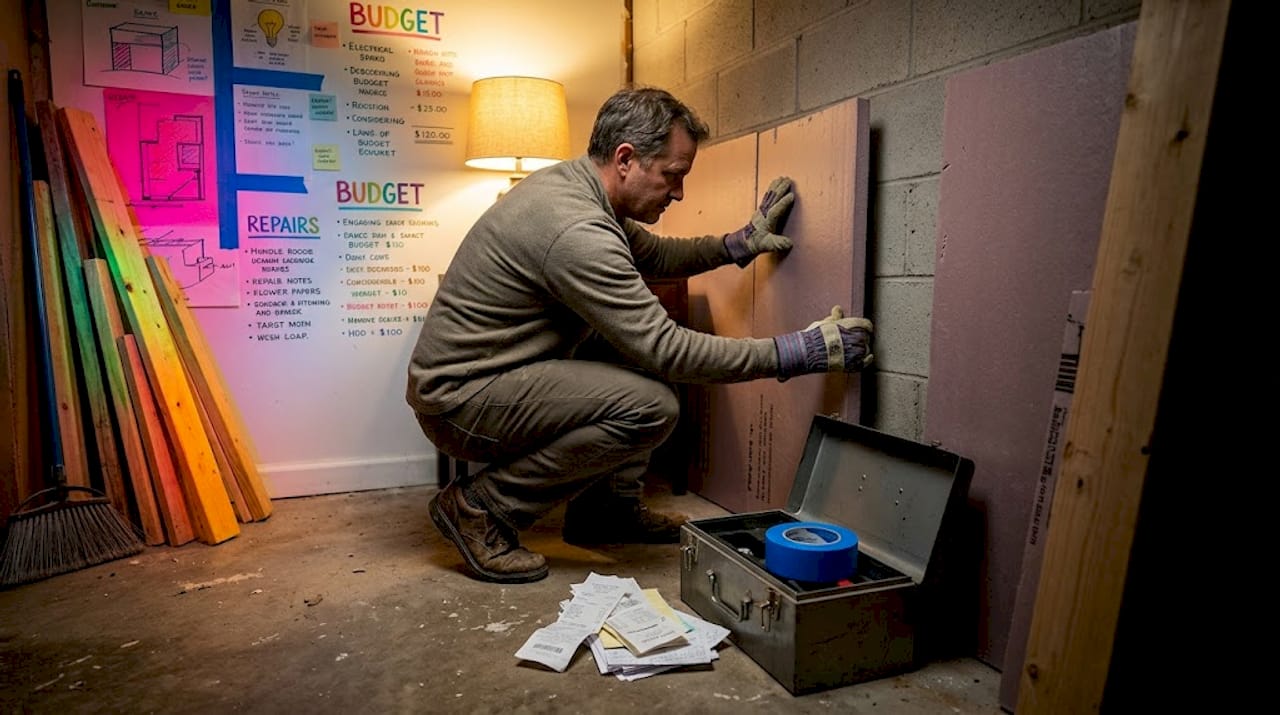
At the homeowner level, deferred maintenance is expensive. A small roof leak ignored for two seasons can become a structural failure that costs five times as much to fix. Regular roof repairs lower emergency costs, improve insurance rates, and reduce strain on public services. Preventing one emergency is almost always cheaper than responding to it.
At the neighborhood level, the math is equally compelling:
Properties with visible disrepair pull down the assessed value of surrounding homes, reducing tax revenue for schools and public services.
Energy-efficient upgrades, including insulation, windows, and HVAC systems, save money for homeowners and municipalities by reducing demand on public utility infrastructure.
Local contractors hired for repair work keep dollars circulating within the community rather than flowing to outside corporations.
Improved housing conditions reduce emergency medical calls, code enforcement actions, and displacement-related costs for local government.
Energy efficiency deserves special attention here. Upgrading a home’s heating or cooling system is not just a comfort improvement. It is a long-term investment that reduces monthly costs for families living on tight budgets. Resources like HVAC tips for homeowners can help residents understand which upgrades deliver the most value before committing to a project.
The economic ripple effect of repair work is one of the strongest arguments for why community development and housing repair belong in the same conversation as workforce development and public health.
Practical strategies for launching repair initiatives
If you are a community organizer, a nonprofit leader, or a resident who wants to start something, the good news is that you do not need a large budget to begin. What you need is a plan, a few committed partners, and the patience to build trust before you build scale.
Run a small pilot first. Jackson’s Love Your Block program demonstrated success with a $30,000 annual budget, repairing 12 homes and engaging local business partners who donated supplies. That proof of concept opened doors to larger funding.
Partner with existing nonprofits. Organizations already embedded in the community have relationships and trust you cannot manufacture quickly. They also often have access to grant funding and can manage program intake.
Put residents in charge. Resident-led project direction enhances long-term satisfaction and builds shared ownership of neighborhood improvements. This is not just a feel-good principle. It produces better outcomes.
Recruit local businesses as sponsors. Hardware stores, lumber yards, and contractors often have community investment budgets and can donate materials or labor in exchange for recognition.
Build a volunteer pipeline, not just a volunteer list. Train volunteers in basic repair skills so they can take on more complex projects over time and mentor new participants.
Pro Tip: Apply for Community Development Block Grants (CDBG) through your local government. These federal funds are specifically designed for housing repair and neighborhood improvement and are often underutilized at the municipal level.
Learning how to sequence repair projects effectively can also help community programs maximize the impact of limited volunteer hours and donated materials.
Challenges that derail repair programs
Even the best-designed home repair programs run into obstacles. Knowing what those obstacles are before you hit them is the difference between a program that stalls and one that adapts.
Funding gaps and waitlists. Demand for repair assistance almost always exceeds supply. Programs that do not plan for this end up with long waitlists that discourage applicants and frustrate volunteers.
Resident distrust. Many low-income homeowners, particularly in communities with histories of urban renewal or code enforcement used as displacement tools, are skeptical of outside help. Building trust takes time and consistent presence before any repair work begins.
Volunteer coordination failures. Enthusiasm does not equal reliability. Programs that rely on informal volunteer networks without clear scheduling and accountability systems frequently experience no-shows and incomplete projects.
Missing wraparound services. Fixing a roof while a family faces eviction or a title dispute accomplishes less than it should. Programs that integrate financial counseling, legal aid, and social services alongside physical repairs produce dramatically better outcomes.
“Third-party nonprofits managing intake and pairing with wraparound services are critical to program eligibility and efficacy.” — LISC Home Repair Loan Model
The fix for most of these challenges is not more money. It is better structure. Programs that invest in intake systems, volunteer training, and community relationship-building before they scale are the ones that last.
My perspective on what repair really builds
I have worked in facilities management and home improvement for years, and I have seen the difference between a repair that fixes a problem and a repair that changes a person. When we go into a home and do the work right, something shifts. The homeowner stands a little taller. They start noticing what else they can do. That confidence is not something you can put on an invoice, but it is real.
What I have learned is that the physical repair is often the smallest part of the impact. The bigger thing is what it signals to the homeowner: someone saw your situation, took it seriously, and showed up. In communities where people have been overlooked for decades, that message is powerful.
I also believe strongly that repair programs fail when they treat residents as recipients rather than partners. The most effective work I have seen happens when the homeowner is involved in decisions about their own home. They know the history of the house. They know what matters most. When you include them in the process, they take ownership of the outcome, and that ownership spreads to the block.
My take on the role of community in home repair is this: the work is never just about the house. It is about what the house represents. Stability. Dignity. A place to belong. When we repair homes, we repair the conditions that allow communities to thrive.
— Ricco
How Manycolorswi brings this mission to life

At Manycolorswi, home repair is not just a service. It is a statement about who deserves a second chance, both the homeowners we serve and the workers we train. Founded in Milwaukee to address the needs of residents coming out of a homeless shelter, Many Colors hires and trains individuals who are often overlooked, giving them real skills in flooring, drywall, painting, and lawn care. Every project we complete strengthens a home and builds a career. If you want to understand what cause-aligned home renovation looks like in practice, we are a working example. Connect with us to learn how your organization can partner with a team that treats community improvement as its core mission.
FAQ
How does home repair help low-income communities specifically?
Home repair programs help low-income communities by preserving homeownership equity, preventing displacement, and addressing safety hazards that disproportionately affect vulnerable households. Programs that pair repair assistance with financial coaching and legal aid produce the strongest long-term outcomes.
What makes volunteer home repair programs effective?
Effective volunteer repair programs succeed through consistent leadership, clear project management, and strong community relationships built before any tools are picked up. Programs like the Maine Seacoast Mission have sustained impact for over two decades by combining reliable volunteer coordination with a genuine commitment to resident needs.
Can small organizations really launch a home repair initiative?
Yes. Jackson’s Love Your Block program operated on a $30,000 annual budget and repaired 12 homes while building local partnerships. Starting small, proving impact, and building trust is a proven path to scaling a community repair program over time.
How do home repairs affect property values in a neighborhood?
Repaired homes prevent the downward pressure on surrounding property values that comes from visible disrepair. When multiple homes on a block are maintained or improved, the entire neighborhood becomes more desirable, which supports tax revenue, school funding, and public services.
What wraparound services should accompany home repair programs?
The most effective programs integrate financial counseling, legal aid for title and estate issues, and connections to social services alongside physical repairs. Research from Richmond, VA found that 61% of repair program participants lacked a will or trust, highlighting how often legal and financial needs go unaddressed when programs focus only on the physical work.
Recommended
Comments