
How to Plan Home Renovation with Purpose

Most homeowners start renovations with a mood board and a budget, and end up with a beautiful room that solves nothing they actually needed to fix. When you plan home renovation with purpose, you shift from decorating to decision-making. You set goals that include energy performance, social impact, and community value, not just aesthetics. This article walks you through every phase: defining what matters, sequencing work for maximum effect, claiming the incentives you’ve earned, and partnering with organizations that turn your project into something bigger than your house.
Table of Contents
Key takeaways
Point | Details |
Start with documented goals | Write down non-negotiables and purpose-driven objectives before contacting a single contractor. |
Sequence by systems impact | Air sealing and insulation come first; HVAC upgrades and electrification follow to lock in gains. |
Claim federal tax credits | The 2026 Energy Efficient Home Improvement Credit covers 30% of qualifying upgrades, up to $3,200 per year. |
Partner for social impact | Reuse organizations and nonprofits can supply materials and labor while reducing landfill waste. |
Verify outcomes early | Schedule third-party certification reviews at the planning stage, not after work is complete. |
How to plan home renovation with purpose: start with clear goals
The single biggest reason renovations disappoint is that homeowners skip the goal-setting phase. They pick finishes before they define what the project actually needs to accomplish. A purpose-driven renovation starts differently. You write down what you need the home to do better, what you refuse to compromise on, and what would make the project genuinely meaningful beyond resale value.
Start by separating your list into two columns: non-negotiables and wish-list items. Non-negotiables might include fixing a drafty attic, replacing a failing HVAC system, or creating an accessible bathroom. Wish-list items are the upgrades that would be great but won’t derail the project if they get cut. This distinction protects your purpose when budgets shrink.
For eco-conscious homeowners, intentional home upgrades go further. Your goals should include measurable targets:
Reduce heating and cooling costs by a specific percentage
Achieve a particular HERS energy rating
Replace gas appliances with electric alternatives
Use a defined percentage of reclaimed or donated materials
Social impact goals deserve the same specificity. If you want your renovation to support community resources, write that down. Maybe it means donating removed cabinets to a local reuse organization, or hiring a contractor like Manycolorswi that trains and employs people who have faced significant barriers to employment. These goals guide every procurement and hiring decision that follows.
Documenting your objectives early reduces delays and protects your priorities when pressure mounts. A written goal sheet is also what you hand to every contractor, designer, and supplier so they understand what you’re actually building toward.
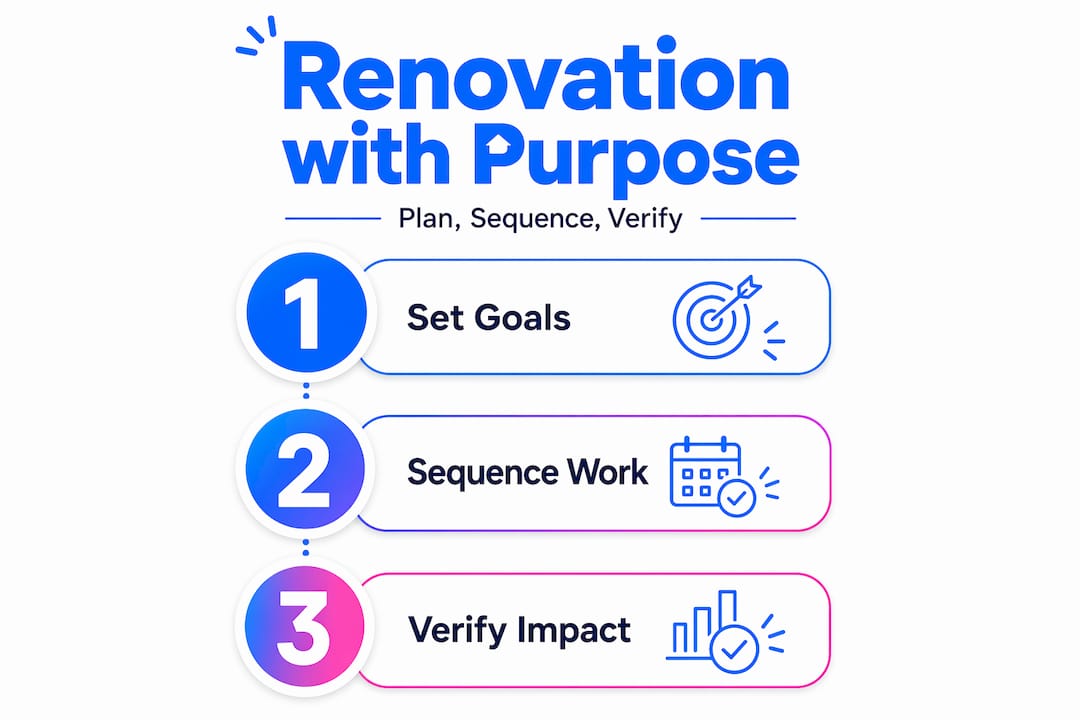
Pro Tip: Write your top three purpose goals on a single index card and keep it on-site throughout the renovation. When a decision feels unclear, those three goals are your tiebreaker.
Sequencing your renovation for maximum impact
Order matters more than most homeowners realize. You can spend $15,000 on a new heat pump and lose a significant portion of its efficiency because the attic is still leaking conditioned air. Sequencing retrofit measures starting with air sealing and insulation captures the biggest energy and climate benefits before any costly system replacements.
Here is the sequence that delivers the most from a purpose-driven renovation:
Air sealing and insulation first. Address the building envelope before anything else. Air sealing and insulation reduce heating and cooling costs by 15% on average, with savings reaching 30 to 45% in older homes. For a household spending $2,400 per year on energy, that is $360 to $1,080 back annually for the life of the home.
HVAC and electrification second. Once the envelope is tight, right-size your new heating and cooling equipment. An oversized heat pump in a leaky house is a waste of money. A correctly sized one in a sealed, insulated home performs exactly as designed.
Windows and doors third. These are often over-prioritized. New windows in a poorly sealed house deliver far less return than the same investment in insulation. Sequence them after the envelope work.
Finishes and fixtures last. Flooring, paint, cabinetry, and fixtures come after the systems work is complete. This prevents damage to new finishes during mechanical work.
Community and reuse steps throughout. Identify reuse partners before demolition begins. Cabinets, doors, fixtures, and lumber that come out during demo can be donated or redirected rather than sent to a landfill.
Here is a quick comparison of sequencing approaches:
Approach | Energy outcome | Cost efficiency | Social impact potential |
Finishes first, systems later | Low | Poor | Minimal |
Systems first, no envelope prep | Moderate | Fair | Minimal |
Envelope first, then systems | High | Strong | High with planning |
Purpose-driven sequence (above) | Highest | Best | Maximized |
To keep the project on track, use a phased renovation checklist that breaks work into demolition, structural, mechanical, and finishes phases, with buffer time built into each transition.
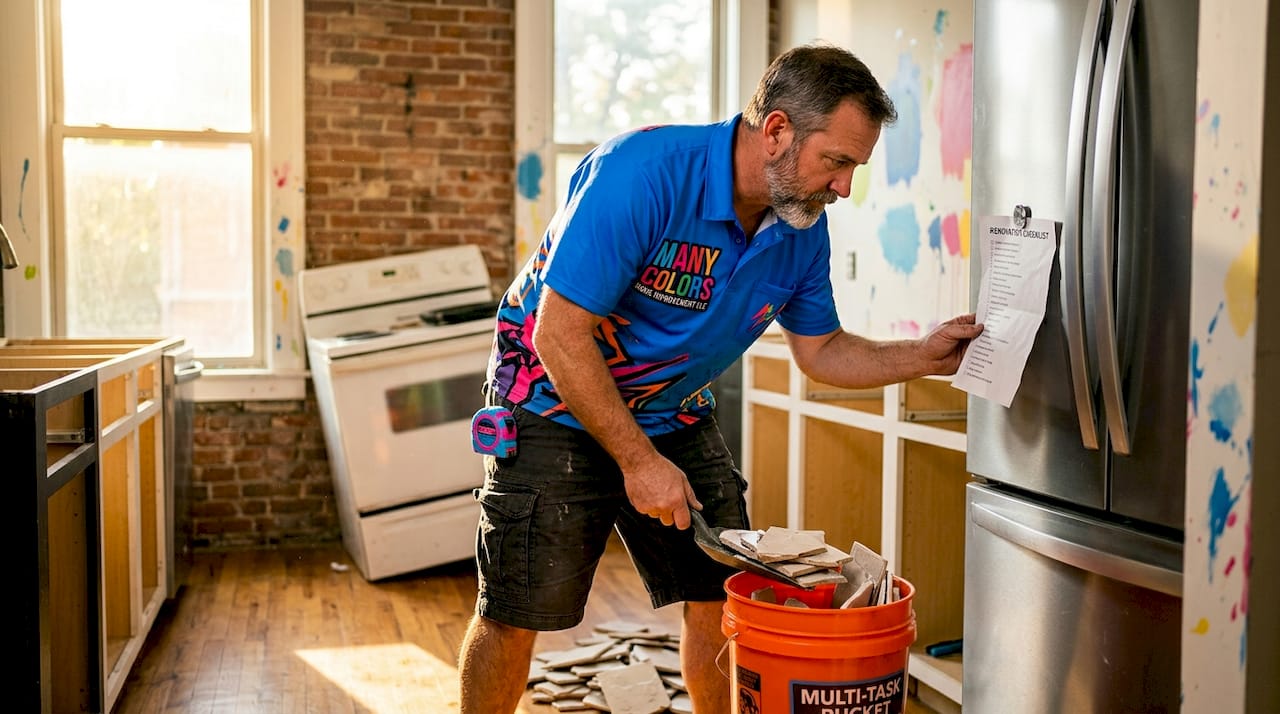
Pro Tip: Add a two-week buffer between your mechanical phase and your finishes phase. Inspections, back-ordered parts, and permit delays almost always land in that window.
Leveraging incentives, certifications, and verification
Eco-conscious renovation planning without a verification strategy is like training for a race without a finish line. Certifications and tax credits give your project accountability and measurable value. They also create a paper trail that supports your purpose goals and adds to your home’s long-term worth.
The most accessible starting point is the federal Energy Efficient Home Improvement Credit. The 2026 credit covers 30% of qualifying home energy upgrades up to $3,200 per year, including up to $2,000 for heat pump improvements and $1,200 for envelope items. The cap resets every January, which means a multi-year renovation can claim credits in multiple tax years.
The compliance details matter. Manufacturers must register a Qualified Manufacturer Identification Number (QMID) and product identification numbers for products to qualify. A product can meet efficiency specs and still be denied the credit if it is not properly registered. Verify this before purchasing.
For homeowners pursuing certifications, here are the main options and what they require:
Energy Star: Requires third-party verification against performance benchmarks. Strong baseline for most residential projects.
DOE Zero Energy Ready Home: Higher bar, requires modeling and HERS index scoring. Suitable for deep retrofits or new construction.
LEED for Homes: Covers energy, water, materials, and indoor air quality. The most comprehensive option and the most documentation-intensive.
Third-party verification using HERS/ERI indexes provides quantitative scoring where lower values reflect better energy performance. Planning for this verification early in your project influences your schedule and scope. If you wait until the project is done to bring in a rater, you may find that certain decisions made during construction disqualify you from the certification you wanted.
Pairing goals with federal tax credit eligibility creates built-in accountability and a verifiable paper trail for your eco purpose. That trail also matters when you sell. Buyers increasingly ask for energy performance documentation.
Incorporating community and reuse into your project
This is where strategic home improvements become something more than personal. When you redirect materials from demolition into community reuse networks, and when you hire contractors who employ people rebuilding their lives, your renovation project becomes a social asset.
The practical steps are more accessible than most homeowners expect:
Contact local reuse organizations before demolition begins. Many will schedule a pickup or allow you to drop off usable materials at no cost.
Ask your contractor about their hiring practices. Manycolorswi, for example, trains and employs individuals from marginalized backgrounds, meaning your project directly supports workforce reintegration.
Specify reclaimed materials for non-structural applications. Reclaimed wood flooring, salvaged hardware, and donated cabinetry can all perform as well as new materials at a fraction of the cost.
Design community-oriented spaces into your project where possible. A shared garden, a tool library nook, or a neighborhood-facing porch all extend your renovation’s impact beyond your property line.
The evidence for this approach is concrete. Community Forklift’s trauma-informed shelter redesign used grant funding to access free building materials and coordinated volunteers to upgrade an 829 square foot common area using reused goods. The project saved costs, reduced landfill burden, and created a healing environment for shelter residents. The same model scales down to residential projects.
“Nonprofit reuse program partnerships ease procurement challenges while enhancing social value in community-serving renovation projects.” — Community Forklift
Cause-aligned home renovation is not a niche concept. It is a procurement and hiring strategy that any homeowner can apply, regardless of budget size.
Practical tools for keeping your project on track
Planning a meaningful renovation generates a lot of moving parts. Without a system to manage them, purpose goals get dropped when the project gets stressful.
Digital twin technology has changed how homeowners and contractors collaborate. Virtual walkthroughs and task tagging allow all stakeholders to review progress, flag issues, and share documents without being on-site. This is especially useful for purpose-driven projects where multiple partners, including reuse organizations, contractors, and certification raters, need access to the same information.
Beyond digital tools, a few habits make a significant difference:
Maintain a single shared folder for all permits, product documentation, QMID numbers, and contractor agreements. This folder is your paper trail for tax credits and certifications.
Schedule a brief weekly check-in with your contractor to review scope, timeline, and any decisions that need your input. Decisions made without you often undo your purpose goals.
Review your original goal document at each phase transition. Ask whether the next phase still serves those goals or whether adjustments are needed.
Pro Tip: Before signing any contractor agreement, ask specifically how they handle material removal during demolition. A contractor with a reuse mindset will already have an answer. One who doesn’t may need guidance, or may not be the right fit for a purpose-driven project.
My perspective on purposeful renovation planning
I’ve worked in facilities management and home improvement for years, and the pattern I see most often is this: homeowners spend months planning the look of a renovation and almost no time planning its purpose. They end up with a beautiful kitchen that still costs $300 a month to heat and cool, in a house that contributed nothing to the neighborhood it sits in.
What I’ve learned is that defining purpose early does not slow a project down. It actually speeds up decision-making. When a homeowner has written down that energy savings and community impact are their top two goals, every product choice, every contractor conversation, and every budget tradeoff becomes easier. The answer is usually obvious.
The sequencing piece is where I see the most expensive mistakes. People replace windows before sealing air leaks, or install a new HVAC system in a house that still loses heat through an uninsulated attic. The envelope-first approach is not a preference. It is the only sequence that protects your investment.
And the community piece. I started Manycolorswi specifically because I saw how much value gets left on the table when renovation projects don’t connect to the people and organizations around them. Hiring someone who is rebuilding their life, donating materials that would otherwise go to a landfill, designing a space that serves more than one family. These are not add-ons. They are what makes a renovation worth doing.
— Ricco
Start your purpose-driven renovation with Manycolorswi

If you’re ready to move beyond surface-level upgrades and actually plan home renovation with purpose, Manycolorswi is built for exactly that. Based in Milwaukee, the company brings together eco-conscious home improvement expertise and a workforce of trained individuals who are earning a second chance. Every project supports both your home’s performance and the broader community. From flooring and drywall to painting and insulation prep, explore what Manycolorswi offers and connect with a team that treats your renovation goals as seriously as you do. You can also read more about community-impact home projects on the blog to deepen your planning before your first conversation.
FAQ
What does it mean to plan home renovation with purpose?
It means defining measurable goals for energy performance, social impact, and community value before any work begins, rather than focusing only on aesthetics or resale value.
What is the best sequence for an eco-conscious home renovation?
Start with air sealing and insulation, then upgrade HVAC and electrification systems, and finish with windows, doors, and cosmetic work. This sequence protects every dollar you spend.
How much can I save with the 2026 federal energy tax credit?
The Energy Efficient Home Improvement Credit covers 30% of qualifying upgrades up to $3,200 per year, with the cap resetting each January for multi-year projects.
How do I incorporate reuse and social impact into my renovation?
Contact local reuse organizations before demolition, specify reclaimed materials where possible, and hire contractors with workforce development missions. These steps cost little and deliver measurable community benefit.
Do I need a certification to verify my renovation’s energy performance?
Not necessarily, but certifications like Energy Star and DOE Zero Energy Ready provide third-party accountability and a documented performance record that supports tax credit claims and future resale value.
Recommended
Comments