
What Is Community-Based Home Improvement?
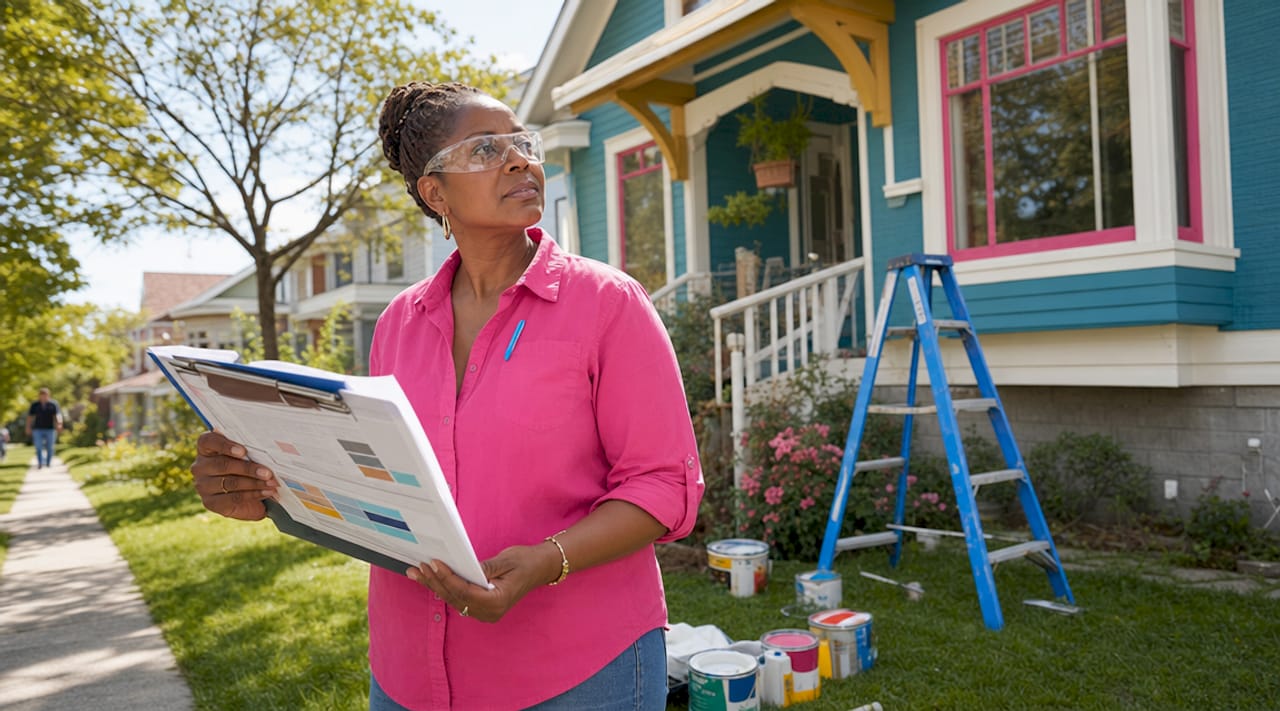
Community-based home improvement is defined as coordinated, neighborhood-level home repair and renovation organized by nonprofits, local governments, or community action agencies to address health, safety, and housing stability for low- to moderate-income households. This model goes far beyond cosmetic upgrades. Programs like Bergen County’s Home Improvement Program and Habitat Charlotte Region’s Critical Home Repair target structural failures, electrical hazards, and accessibility barriers that put vulnerable residents at direct risk. What separates these community-focused initiatives from standard contracting is the explicit social mission: keep people housed, keep homes safe, and build the economic capacity of the communities doing the work.
What is community-based home improvement and how does it work?
Community-based home improvement refers to organized programs that deliver critical repairs to homeowners who cannot afford them through the private market, using structured eligibility criteria, vetted contractors, and defined repair scopes. The industry term most practitioners use is “community home repair program,” though “community-based home improvement” accurately describes the same coordinated, place-based approach. Both terms refer to the same model and are used interchangeably across federal, nonprofit, and municipal contexts.
Programs concentrate on repairs that carry the highest risk if left unaddressed. Roofing failures, plumbing leaks, faulty electrical systems, HVAC breakdowns, and accessibility modifications for aging or disabled residents make up the core repair categories. Homeowner education and tool lending are often layered on top, giving residents the knowledge to maintain their homes after the program exits.
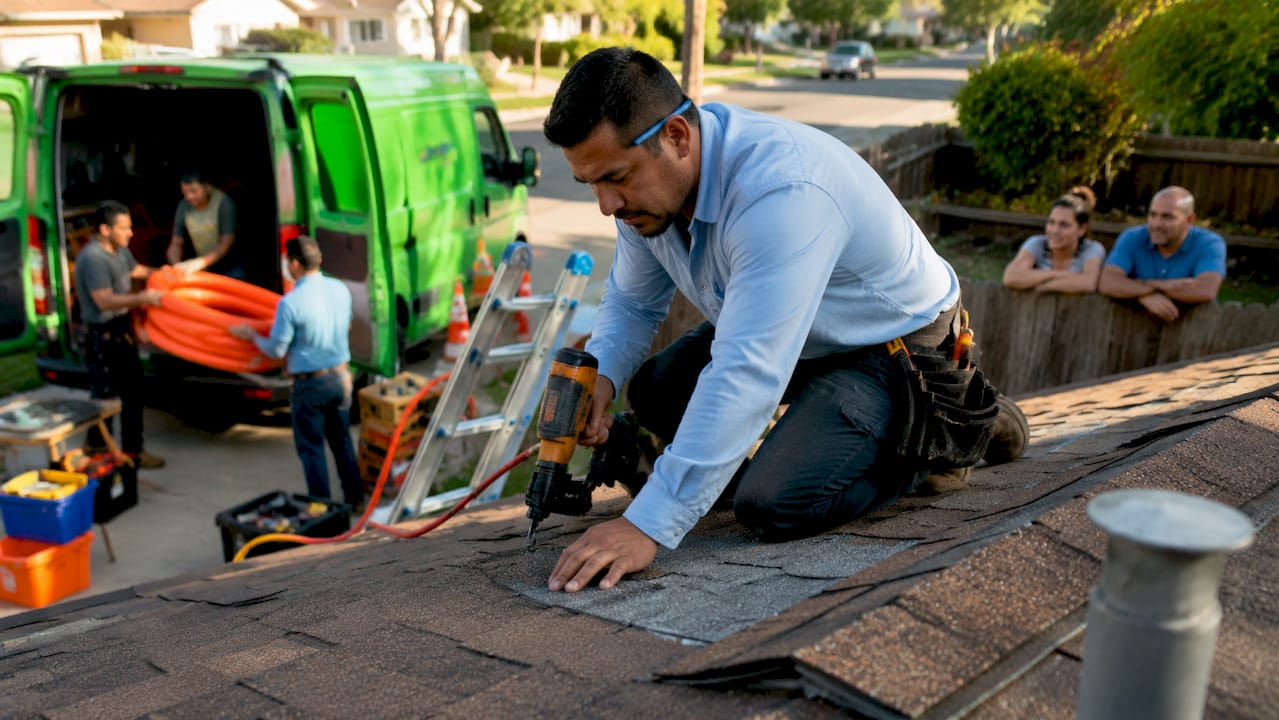
Eligibility is almost always income-based. Bergen County’s program, for example, requires applicants to fall within defined income limits tied to household size and county median income. The program delivers interest-free loans up to $17,500 for one-family homes, with no monthly payments and repayment deferred until the home is sold or the title is transferred. That structure removes the financial barrier entirely for residents who own their home but lack liquidity.
Pro Tip: If you are an organization designing a local home improvement initiative, define your repair scope before you open applications. Programs that try to cover everything end up serving fewer households. Roofing, electrical, and HVAC repairs deliver the highest health and safety return per dollar.
Program model | Key feature |
Interest-free deferred loan | No monthly payments; repayment triggered by sale or title transfer |
Outright grant | No repayment required; typically for lowest-income households |
Matching grant | Resident contributes a share; used in collective neighborhood models |
Deed-restricted repair grant | Grant forgiven over time with affordability covenant attached |
How do these programs integrate social impact and workforce development?
Community home renovation programs that combine physical repairs with workforce training produce two outputs at once: safer homes and more employable residents. This dual-output model is the most significant design innovation in the field, and it is the model Manycolorswi was built around.
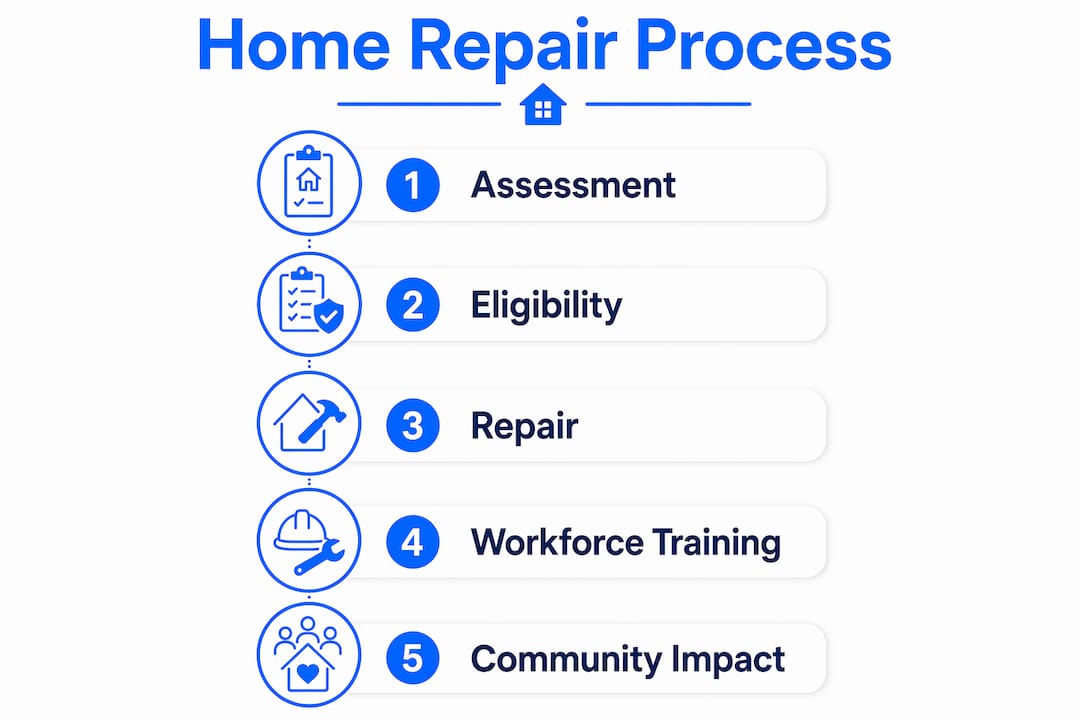
The Hope Building program run by Housing Development Alliance demonstrates what this looks like in practice. Trainees receive $13 per hour in wages while learning construction trades through a combination of paid job-site experience and classroom instruction. The program pairs vocational skills with wraparound supports, including recovery partnerships and supplementary education, because workforce retention requires more than a tool belt. Without those supports, trainees with housing instability or recovery needs drop out before completing credentialing.
Community Homeworks takes a parallel approach focused on the homeowner side. The program delivers 40 to 50 educational sessions annually alongside critical repairs, teaching residents how to use loaned maintenance tools and manage routine upkeep. That knowledge transfer reduces the rate at which repaired homes fall back into disrepair, extending the program’s impact well beyond the initial intervention.
The Renaissance Block Challenge in the Oswego area adds a third dimension: collective neighborhood action. The program requires 5 to 15 neighboring properties to participate together to qualify for matching grants up to $1,500 for exterior improvements. That requirement is not bureaucratic friction. It is a deliberate mechanism to build social capital, because neighbors who organize together to improve their block are more likely to maintain those improvements and advocate for future investment.
Paid apprenticeships in construction trades give residents marketable credentials while completing real repairs on real homes.
Homeowner education sessions reduce the likelihood of deferred maintenance cycles that undo program gains.
Collective participation models like the Renaissance Block Challenge create neighborhood-level accountability and pride.
Wraparound supports, including counseling, recovery services, and job placement, determine whether workforce trainees complete programs and retain employment.
Pro Tip: Organizations launching workforce development components should partner with local recovery programs and community colleges before recruiting trainees. The career pathway in home repair is real, but trainees with compounding barriers need structured support to reach it.
What funding sources and affordability tools do these programs rely on?
Federal block grants are the primary funding engine for most community-based housing projects in the United States. HUD’s Community Development Block Grant (CDBG) and HOME Investment Partnerships programs are the two most common sources, but state and local administrators control program design, eligibility thresholds, and allowable repair categories within federal constraints. That local discretion explains why two programs both funded by CDBG can look entirely different in practice.
Understanding that variability is not a minor technical point. It is the key to designing or accessing these programs effectively. An organization in Milwaukee operates under different rules than one in Charlotte, even if both draw from the same federal appropriation. Local administrators decide whether funds flow as grants, loans, or deferred payment instruments, and those choices carry major consequences for residents.
Funding source | Type | Local control level |
HUD CDBG | Federal block grant | High: local admin sets eligibility and scope |
HUD HOME | Federal block grant | High: state and local agencies administer |
State housing finance agencies | State grants or loans | Moderate: state sets rules, locals apply |
Nonprofit foundations | Grants | Full: foundation sets all terms |
Local government general funds | Grants or loans | Full: municipality controls all design |
Affordability preservation is the mechanism that prevents a repaired home from becoming a displacement risk. Habitat Charlotte Region’s Critical Home Repair program attaches a five-year deed restriction to every repair grant, requiring the homeowner to remain in the property for that period to preserve the affordability investment. Deferred loans that trigger repayment only upon sale serve a similar function. Both tools protect the program’s investment while giving residents the stability to age in place.
The risk in poorly designed affordability mechanisms is real. A deed restriction that is too long or a repayment trigger that is too aggressive can trap a resident in a home they need to sell, or push them toward a sale they were not ready to make. Affordability tools must match the resident’s actual mobility plans and the local housing market’s displacement pressure.
What are the real benefits and challenges for residents and communities?
The primary benefit of collaborative home upgrades is health risk reduction. HUD’s Healthy Homes Principles guide most program interventions toward the eight categories of home-based health hazards: lead, mold, pests, moisture, carbon monoxide, fire, falls, and chemical exposure. Addressing these hazards in low-income homes prevents emergency room visits, reduces chronic illness, and cuts long-term housing costs for residents who cannot absorb those expenses.
Displacement prevention is the second major benefit, and it is often underappreciated. A homeowner who cannot afford a roof repair does not simply live with a leaky roof. They face code violations, insurance cancellation, and eventually a forced sale at below-market value to a cash buyer. Community home repair programs interrupt that cycle by delivering the repair before the crisis point, keeping the homeowner in place and the neighborhood stable.
The challenges are real and worth naming directly:
Funding limits force programs to prioritize the most critical repairs, leaving secondary needs unaddressed and waitlists long.
Administrative eligibility requirements, income documentation, and contractor procurement rules create barriers for both residents and program staff.
Resident outreach in the communities most in need is consistently harder than program designers expect, particularly among residents with prior negative experiences with government programs.
Workforce development components require sustained funding beyond the initial grant cycle to produce credentialed, placed workers rather than just trained ones.
The social impact of home repair compounds over time when programs are designed with community cohesion in mind. Neighbor-led models and collective participation requirements produce social infrastructure that outlasts the physical repairs.
Key takeaways
Community-based home improvement works when programs align critical repair delivery, affordability preservation, and workforce development into a single, resident-centered model.
Point | Details |
Core definition | Coordinated neighborhood-level repair programs targeting health, safety, and housing stability for low-income homeowners. |
Program models vary | Deferred loans, outright grants, and deed-restricted repairs each carry different implications for resident mobility and displacement risk. |
Workforce development multiplies impact | Programs that train residents in construction trades while completing repairs produce both safer homes and more employable workers. |
Federal funding is locally controlled | CDBG and HOME grants fund most programs, but local administrators set eligibility and repair scope within federal guidelines. |
Affordability tools must fit residents | Deed restrictions and deferred repayment protect program investments but must match residents’ actual housing plans to avoid unintended harm. |
What I’ve learned running community-centered home improvement work
Most organizations approach community home repair as a construction problem. Get the funding, find the contractors, fix the roof. What I have seen in practice is that the construction is the easy part. The hard part is designing a program that residents actually trust enough to apply for, and that produces outcomes that last beyond the warranty period on the materials.
The workforce development piece is where I see the most unrealized potential. Home repair skills transfer directly to commercial construction, facilities management, and property maintenance. The people most likely to be overlooked by traditional employers, including those coming out of shelters, recovery programs, or the justice system, are often the most motivated workers on a job site when someone gives them a real chance and a structured path forward.
What I would tell any organization launching a local home improvement initiative is this: do not separate the social mission from the operational model. The affordability mechanism you choose, the contractor you hire, the eligibility process you design, all of it either reinforces or undermines the trust you are trying to build with the community. Programs that treat residents as recipients of charity produce different outcomes than programs that treat them as partners and potential workforce members.
The Renaissance Block Challenge model is one of the most honest designs I have seen, because it requires neighbors to organize before they receive anything. That requirement filters for commitment and builds the social infrastructure the physical repairs are meant to support. More programs should think that way.
— Ricco
How Manycolorswi supports community-based home improvement
Manycolorswi was founded specifically to address the gap between community need and workforce capacity in Milwaukee. Led by Ricco, the company hires and trains individuals from homeless shelters and marginalized backgrounds, delivering flooring, drywall, painting, and lawn care services while building real careers.

Every project Manycolorswi takes on is both a home improvement job and a workforce development opportunity. The crew members bring lived experience to the communities they serve, and the work builds confidence, credentials, and economic stability for people who have been systematically excluded from both. If your organization is looking for a contractor that aligns with the social mission of community home renovation, visit Many Colors to learn more about available services and partnership opportunities.
FAQ
What is community-based home improvement?
Community-based home improvement is a coordinated, neighborhood-level program that delivers critical home repairs to low- to moderate-income homeowners through nonprofits, local governments, or community agencies, with a focus on health, safety, and housing stability.
Who qualifies for community home repair programs?
Eligibility is typically based on household income relative to the area median income, homeownership status, and the type of repair needed. Bergen County’s program, for example, sets income limits by household size and restricts repairs to health and safety categories.
How are community home improvement programs funded?
Most programs draw from federal HUD CDBG and HOME block grants, with state housing finance agencies and private foundations providing additional support. Local administrators control how those funds are structured, whether as grants, deferred loans, or deed-restricted repair assistance.
What repairs do these programs typically cover?
Programs focus on critical repairs including roofing, plumbing, electrical hazards, HVAC systems, and accessibility modifications. Habitat Charlotte Region’s Critical Home Repair covers structural safety, heating and cooling, and electrical and plumbing hazards as its core scope.
How does workforce development connect to community home renovation?
Programs like Hope Building train local residents in construction trades at paid wages while completing real housing projects, producing both repaired homes and credentialed workers. Wraparound supports including classroom learning and recovery partnerships are what determine whether trainees complete the program and retain employment.
Recommended
Comments