
What Is Ethical Home Renovation: a Homeowner's Guide

Ethical home renovation is the practice of improving your home by prioritizing environmental sustainability, social responsibility, and community wellbeing alongside cost and aesthetics. It covers everything from the materials you choose and the workers you hire to how your project affects your neighbors and the local environment. Understanding what is ethical home renovation matters because renovation decisions carry real consequences far beyond your property line. A project done right produces a healthier home, a stronger community, and a smaller environmental footprint. This guide breaks down every dimension of that commitment so you can act on it.
What is ethical home renovation, and why does it matter?
Ethical home renovation is defined as comprehensive environmental and social impact assessment applied to every stage of a remodeling project, from design through completion. That definition separates ethical renovation from standard remodeling in a fundamental way. Standard projects optimize for budget and appearance. Ethical projects add three additional filters: sustainability, labor fairness, and community impact.
The distinction is practical, not philosophical. When you choose flooring, an ethical lens asks where the wood was harvested, who cut it, whether the finish releases harmful chemicals indoors, and what happens to the offcuts. A purely cost-driven decision skips all four questions. The result is a home that may look identical but carries hidden costs in environmental damage, worker exploitation, and indoor air pollution.
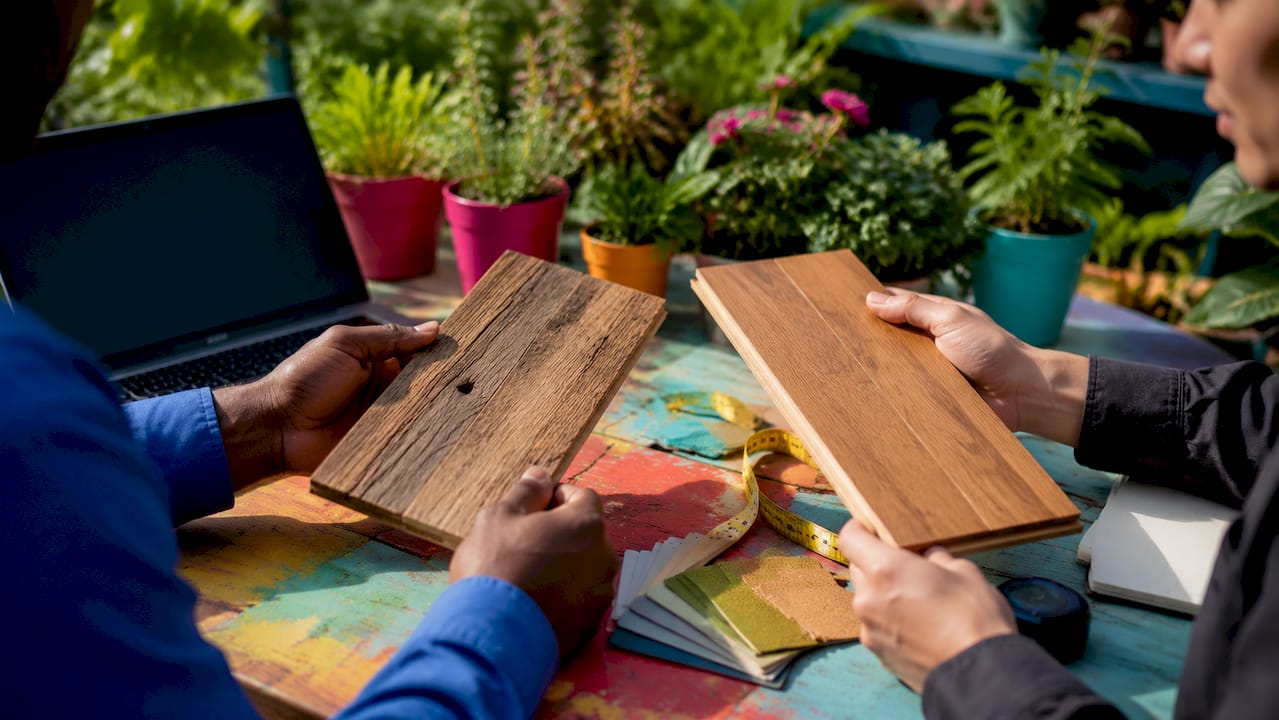
Ethical renovation also prioritizes long-term durability over short-term savings. A cheap product that fails in five years generates more waste and more labor than a durable product installed once. That durability commitment is itself an environmental and economic choice, one that ethical homeowners make deliberately.
What sustainability means in ethical home renovation
Sustainability in green home remodeling operates across four interconnected systems: energy, water, materials, and indoor air quality. Treating them separately misses the point. An initial vulnerability assessment addressing climate and natural hazard risks is the recommended first step before any design decisions, because resilience and sustainability are inseparable goals.
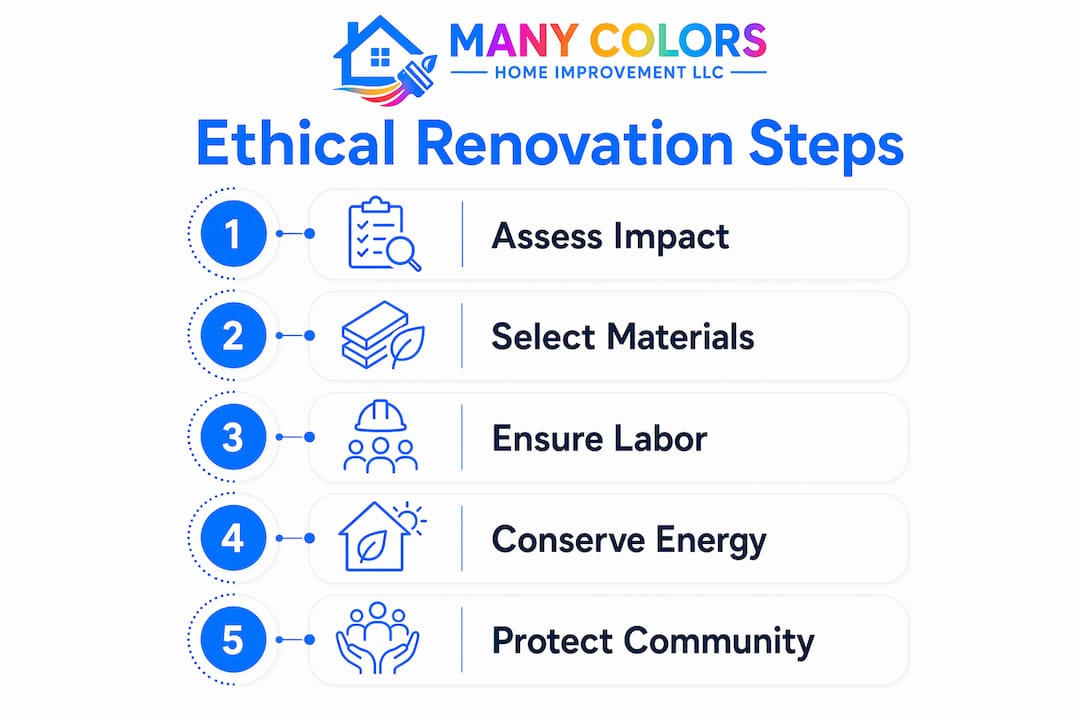
Energy efficiency is the most visible entry point. Upgrading insulation, sealing air leaks, and installing ENERGY STAR-rated windows and HVAC systems reduces both carbon emissions and utility bills. Solar panel integration, where your roof and budget allow, takes that further by generating clean energy on site.
Water conservation deserves equal attention. Low-flow fixtures from brands like Kohler or Moen cut household water use without sacrificing performance. Greywater systems, which redirect sink and shower water to irrigation, go further by closing the loop on water consumption entirely.
Materials selection is where many homeowners underestimate their impact. Construction waste totals roughly 600 million tons annually, a figure that makes the reduce, reuse, recycle principle more than a slogan. Retaining existing structural elements, salvaging fixtures, and specifying reclaimed lumber or recycled-content tile directly reduces your project’s contribution to that total.
Indoor air quality rounds out the sustainability picture. Low-VOC paints from brands like Benjamin Moore Natura or Sherwin-Williams Harmony release fewer volatile organic compounds, protecting the health of everyone who lives in the home. Natural ventilation design and formaldehyde-free cabinetry extend that protection further.
Conduct an energy audit before specifying any mechanical systems
Specify low-VOC or zero-VOC finishes for all interior surfaces
Salvage and donate usable fixtures before demolition begins
Install WaterSense-labeled fixtures throughout kitchens and bathrooms
Choose materials with Environmental Product Declarations (EPDs) for verified impact data
Pro Tip: Request an Environmental Product Declaration from your supplier before ordering any major material. EPDs are third-party verified documents that quantify a product’s environmental impact across its full life cycle, giving you real data instead of marketing language.
How labor practices and material sourcing define ethical building
Social responsibility in renovation means the people who build your home and the workers who produced your materials are treated fairly. Ethical construction practices include fair wages, safe working conditions, and legal employment status for every worker on your project. That standard is harder to verify than it sounds, because global supply chains for building materials can involve multiple tiers of subcontractors operating in countries with weak labor protections.
The risk is real. Forced labor and human rights abuses have been documented in the production of materials including stone, brick, and certain wood products. Choosing certified materials is the most reliable way to reduce that risk without auditing every supplier yourself.
Here is a practical sequence for verifying ethical sourcing before you spend a dollar:
Identify your major material categories. Wood, stone, tile, insulation, and paint each carry different supply chain risks. Start with the highest-volume items.
Require third-party certification. FSC-certified wood signals responsible forest management and attention to worker and Indigenous rights. Fair Trade certification applies to certain textiles and finishes. These are not marketing claims. They are audited standards.
Use the spec-plus-proof approach. Specify certified materials in your contract, then require your contractor to provide documentation before placing orders. A transparent supply chain is one that can produce paperwork on demand.
Vet your contractor’s labor practices. Ask directly whether all workers are legally employed, whether subcontractors are paid on time, and whether the job site follows OSHA safety standards. Reputable contractors answer these questions without hesitation.
Check for local hiring commitments. Contractors who hire locally, particularly from underserved communities, reduce transportation emissions and reinvest wages in your neighborhood.
Pro Tip: Add a certification clause to your renovation contract. It should state that the contractor will provide FSC, Fair Trade, or equivalent documentation for all specified materials before delivery. This one sentence shifts accountability from goodwill to legal obligation.
What industry standards guide responsible home improvement
Recognized standards translate broad sustainability goals into measurable performance targets, which is exactly what you need when evaluating contractors and materials. The ICC 700-2025 National Green Building Standard (NGBS), developed by the National Association of Home Builders (NAHB) and the International Code Council (ICC), is the primary residential framework in the United States. It applies directly to renovations and covers six core performance categories.
Standards like the NGBS translate broad sustainability goals into clear performance categories, which is their most important function for homeowners. Without a standard, any contractor can call a project “green.” With one, you have a checklist.
Standard or certification | What it covers | Why it matters |
ICC 700-2025 NGBS | Energy, water, indoor air quality, site, materials, operation | Comprehensive residential renovation benchmark with four certification levels |
Forest Stewardship Council (FSC) | Wood and forest products | Verifies responsible forestry and fair labor in the supply chain |
ENERGY STAR | Appliances, windows, HVAC, insulation | Federally backed energy performance verification |
WaterSense (EPA) | Plumbing fixtures and irrigation | Confirms water efficiency without performance trade-offs |
LEED for Homes | Whole-home sustainability | Internationally recognized, points-based certification system |
Certification levels within the NGBS run from Certified to Silver, Gold, and Emerald. Each level requires a higher point total across the six categories. Emerald certification represents the highest performance tier and is the benchmark for projects that take eco-friendly renovations seriously rather than symbolically.
Greenwashing, the practice of making vague environmental claims without evidence, is a genuine risk in the renovation market. Asking a contractor which standard their work is certified to, and by whom, is the fastest way to separate substance from marketing.
How ethical renovations minimize community impact
Your renovation affects more than your household. Noise, dust, runoff, and debris all cross property lines, and responsible renovation practices protect shared spaces and local wellbeing beyond your project footprint. This is not a courtesy. It is part of what renovating with integrity means.
Practical community-minded practices include:
Notify neighbors at least one week before work begins, including expected duration and the noisiest phases
Limit loud work such as demolition and power tools to weekday hours between 8 a.m. and 5 p.m.
Install silt fences or sediment barriers around the perimeter to prevent construction runoff from reaching storm drains
Designate a single dumpster location that does not block sidewalks or neighboring driveways
Conduct a thorough site cleanup at the end of each workday, not just at project completion
Separate recyclable construction waste from landfill waste on site
Scheduling construction tasks with care and treating storm drain protection as integral to ethics rather than an afterthought are markers of a contractor who understands the full scope of responsible home improvement. When you plan renovations with community impact in mind, you build goodwill that outlasts the project itself.
Key takeaways
Ethical home renovation succeeds when sustainability, fair labor, certified materials, and community mindfulness are treated as non-negotiable project requirements rather than optional upgrades.
Point | Details |
Define ethics broadly | Ethical renovation covers energy, water, materials, labor, and community impact together. |
Require certifications | FSC, NGBS, ENERGY STAR, and WaterSense provide audited proof beyond marketing claims. |
Use spec-plus-proof | Require documentation of certified materials before orders are placed, not after delivery. |
Protect your neighbors | Notify neighbors early, control runoff, and limit noisy work to reasonable hours. |
Start with a resilience assessment | Assess climate and hazard risks before design to build durability into the project from day one. |
What I’ve learned from years of renovating with purpose
I have managed renovation projects across Milwaukee for years, and the single biggest mistake I see homeowners make is treating ethics as a final checkbox rather than a starting condition. They pick the tile, hire the crew, and then ask whether the wood was FSC-certified. By that point, the order is already placed.
The projects that actually deliver on their ethical promise start differently. They begin with a question: what do we want this renovation to do for the people inside this home, the workers building it, and the neighborhood around it? That question changes every decision that follows, from which contractor you call first to how you handle demolition debris.
Fair labor is the piece most homeowners skip because it feels invisible. You never meet the workers who milled your flooring or quarried your countertop stone. But demanding certification documentation from your contractor is how you make those invisible workers visible in your decision-making. It takes one conversation and one contract clause. Most ethical contractors welcome it because it protects them too.
The community impact dimension surprised me most when I started paying attention to it. A renovation that runs six weeks generates six weeks of noise, dust, and disruption for everyone on your block. Treating that disruption as someone else’s problem is a choice. Treating it as your responsibility is also a choice. The second one costs almost nothing extra and builds the kind of neighborhood trust that makes future projects easier for everyone.
Ethical renovation is not a premium product. It is a set of decisions made consistently throughout a project. Any homeowner willing to ask the right questions and hold contractors accountable can do it.
— Ricco
How Manycolorswi brings ethical renovation to Milwaukee homeowners

Manycolorswi was built on the belief that home improvement should create opportunity, not just square footage. Founded to provide employability skills and a second chance to residents of a Milwaukee homeless shelter, Manycolorswi hires and trains individuals from diverse ethnic backgrounds who are often overlooked by the traditional workforce. Every flooring installation, drywall repair, painting job, and lawn care project the team completes reflects a commitment to ethical building practices that extends from the job site to the community. When you work with Manycolorswi, you are not just renovating your home. You are investing in a workforce that reinvests in Milwaukee. Contact Manycolorswi to discuss your next project and get guidance on sourcing certified materials, scheduling responsibly, and building with integrity from day one.
FAQ
What is ethical home renovation in simple terms?
Ethical home renovation is the practice of remodeling your home while prioritizing environmental sustainability, fair labor, and community wellbeing alongside cost and design. It covers material sourcing, worker treatment, waste reduction, and neighborhood impact.
How do I choose ethical home improvement services?
Look for contractors who can provide FSC, ENERGY STAR, or NGBS certification documentation for the materials they use and who openly discuss their labor practices and subcontractor relationships. A contractor who cannot answer those questions clearly is a contractor worth reconsidering.
What certifications should I look for in sustainable home renovation?
The ICC 700-2025 National Green Building Standard (NGBS), Forest Stewardship Council (FSC) certification for wood products, ENERGY STAR for appliances and systems, and WaterSense for plumbing fixtures are the most recognized and audited standards for residential renovation in the United States.
Does ethical renovation cost significantly more?
Not necessarily. Decisions like salvaging existing materials, specifying durable products, and hiring locally can offset premium costs for certified materials. Long-term savings on energy and water bills also reduce the total cost of ownership over time.
How does renovation affect my neighbors ethically?
Ethical site management includes notifying neighbors before work begins, limiting noisy tasks to reasonable hours, preventing construction runoff from reaching storm drains, and maintaining daily site cleanup. These practices protect shared spaces and reflect a genuine commitment to community wellbeing.
Recommended
Comments